

Moisture Management in Compressed Air Systems and Selecting the Right Drying Technology
Although the air used in compressed air systems is often considered “clean,” it is actually drawn from the atmosphere and always contains a certain amount of water vapor. The critical factor here is to correctly understand when and how this moisture becomes a problem within the system.
For example, a compressor with a capacity of 1,000 m³/h operating under typical environmental conditions (approximately 25°C temperature and 80% relative humidity) introduces about 100 liters of water into the system over the course of a day without being noticed. When air is compressed, the partial pressure of water vapor increases. Later, as the air cools at the compressor outlet and throughout the system, some of the water vapor reaches the dew point and condenses into a liquid phase. Refrigerated air dryers generally cannot be set below a pressure dew point of +3°C to prevent ice formation on the evaporator surfaces.
As compressed air travels through the line and loses heat, it reaches the dew point, and the water vapor condenses into a liquid. This leads to uncontrolled condensation within the system. This resulting moisture accelerates corrosion in the piping, combines with oil and particles to form sludge, and directly affects the performance of pneumatic equipment. In more critical applications, moisture becomes not just an equipment issue but a parameter that directly determines product quality.
For this reason, the goal in compressed air systems is to remove water from the system at a controlled point, rather than where it forms randomly. This is precisely the primary purpose of air dryers: to manage condensation within the dryer itself—rather than within the system—by lowering the dew point.
Refrigerated Air Dryers: Moisture Removal Through Controlled Condensation
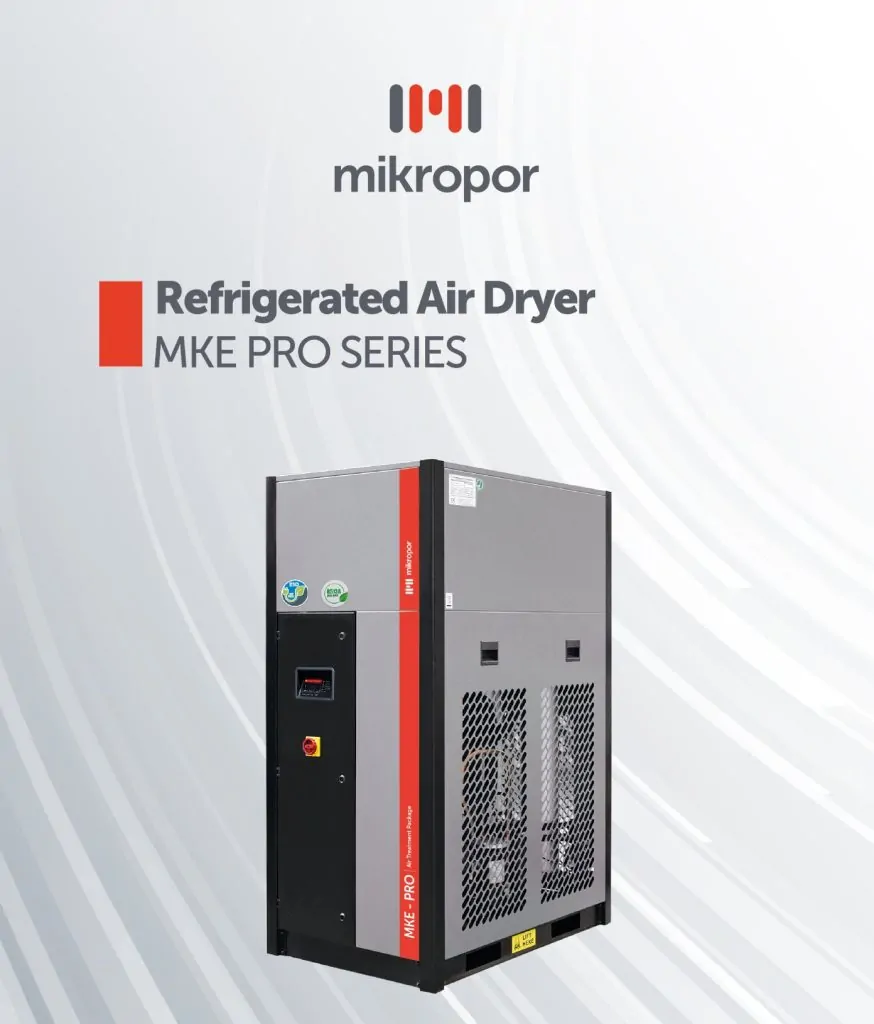
Refrigerated air dryers condense the water vapor in compressed air by cooling it in a controlled manner. The air is typically cooled to a pressure dew point of +3°C, at which point the water vapor turns into liquid.
The resulting condensate is separated from the air stream using high-efficiency separators and continuously discharged from the system via automatic drain systems. The critical factor here is ensuring that the separated water is not retained within the system, thereby eliminating the risk of re-condensation. Even if the air reheats, no new condensation forms along the line because the free water has been removed.
Thanks to their energy efficiency, ease of operation, and stable performance, refrigerated-type dryers offer a balanced and reliable solution for general industrial applications.
Adsorption-Type Air Dryers: Moisture Control at the Molecular Level
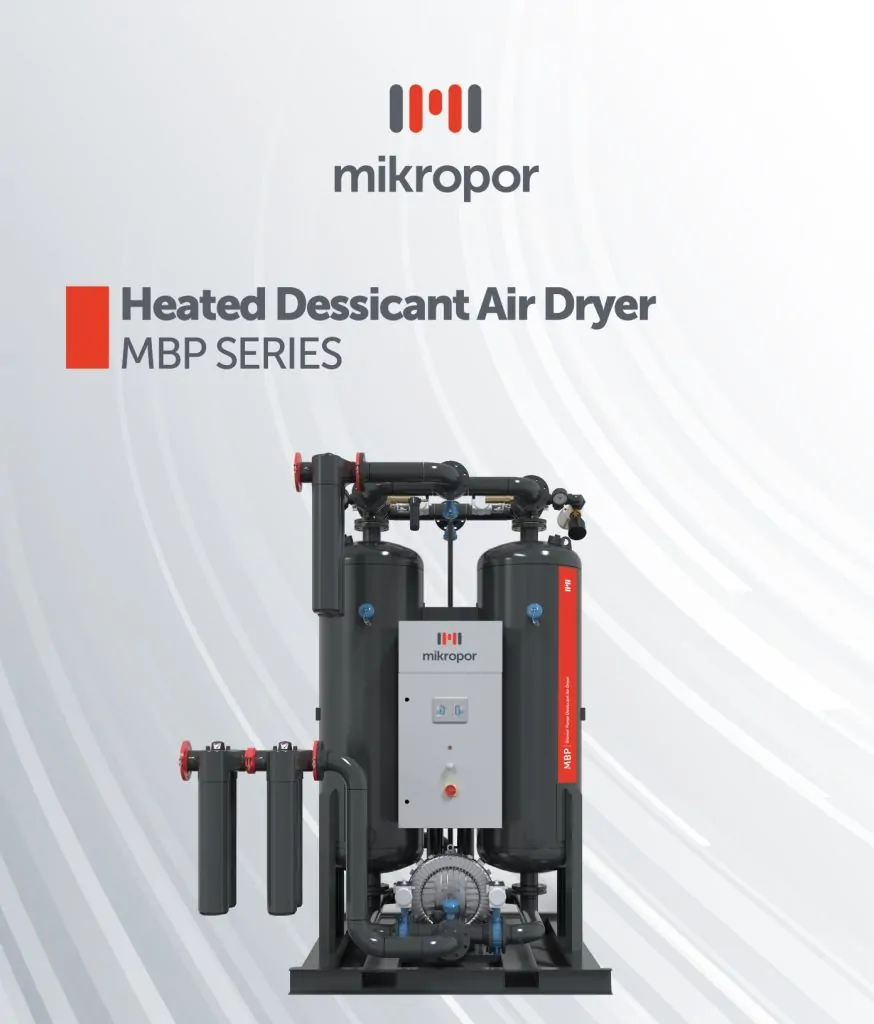
Adsorption-type air dryers work by trapping water vapor in the air on the large internal surface areas of adsorbent materials such as activated alumina, silica gel, or molecular sieves. This process occurs as water vapor molecules adhere to the active surfaces within the porous structure of the adsorbent material.
The system typically consists of a two-tower configuration. While one tower performs the drying process, the other enters the regeneration process. During regeneration, the water held on the adsorbent material is converted back to the vapor phase and carried out of the system along with the regeneration air.
Thanks to this technology, pressure dew points as low as -40°C and even -70°C can be achieved. In other words, there is virtually no water left in the air. This makes adsorption-type dryers indispensable in processes where moisture control is critical.
Choosing the Right Dryer: Defining the Need Before Considering Technology
Refrigerated and adsorption-type air dryers are not alternatives to one another; they are technologies developed to address different needs. Therefore, the right choice depends more on the air quality required by the system than on the specific equipment used.
If the application can operate safely at a dew point of +3°C, refrigerated dryers offer a balanced solution in terms of initial investment cost, energy efficiency, and ease of operation. However, if the process requires lower humidity levels, adsorption-type dryers provide the necessary performance.
The most common mistake made at this stage is focusing solely on the initial investment cost. Yet, selecting the wrong dryer can lead to much higher costs due to production losses, equipment failures, quality issues, and unplanned downtime. Therefore, when selecting a dryer, process requirements, environmental conditions, the target pressure dew point, and total operating cost must be evaluated together.
Mikropor offers optimized systems for various industrial applications through its refrigerated and adsorption-type air dryer solutions, developed using an advanced engineering approach. When used in the correct applications, both technologies provide high efficiency, reliability, and long-lasting performance.
In conclusion, drying in compressed air systems is an invisible yet critical factor that directly determines system performance. Therefore, selecting the right dryer is not merely a choice of equipment but a strategic engineering decision that directly impacts production quality and operational continuity.
To determine the most suitable drying technology for your compressed air system and explore solutions for different applications in more detail, click here; to contact Mikropor’s expert sales teams to identify the system best suited for your application, click here.
Marketing Department